
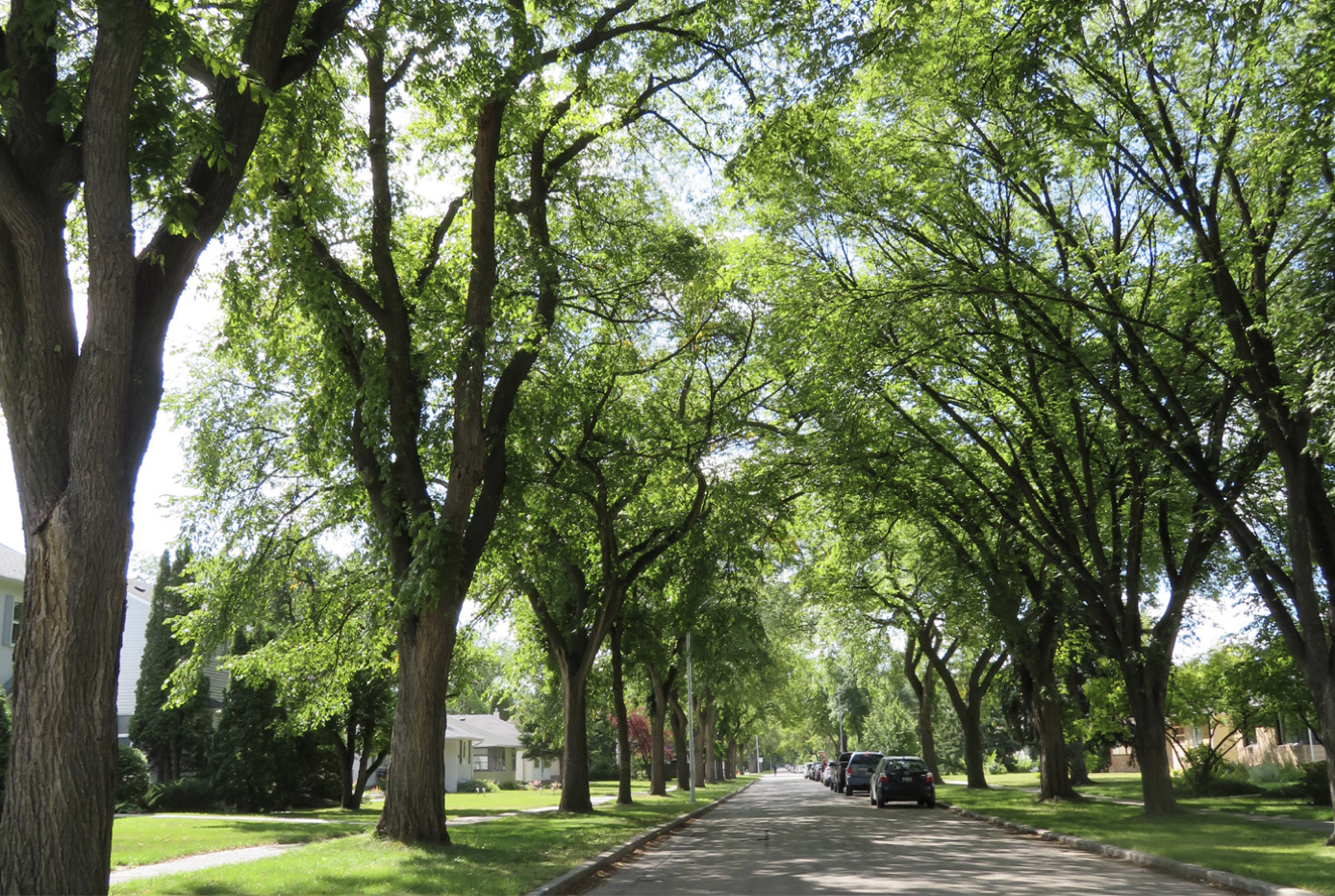
I wanted to write about the recent talks around shifting funding away from the City’s urban forestry program. I am clearly opposed to that proposal. I want to thank residents and community groups who spoke up in support of protecting our Urban Forestry program. While Executive Policy Committee has reversed course, I remain very concerned about what program and priority they may turn to next to cut.
Residents of Fort Rouge–East Fort Garry carry a special responsibility: our ward contains the highest density of Winnipeg’s oldest and largest trees. This means we experience significant losses from Dutch Elm Disease, storms, and aging trees. What took over one hundred years to build cannot be replaced overnight! As your Councillor I am especially responsible to honour what time built up. To this end, I have a strong record of policy work on protection. Working to create grass roots organizations who in turn carry the work so future generations can enjoy it tomorrow.
I am not only in full agreement funding needs to be sustained but, in many cases, I’ve actively supported the policy. As Chairperson for Parks, and the author of the biodiversity amendment. I generated the policy framework that holds and guides the City including our Urban Forest Strategy. I worked to increase funding for urban forestry by 45% by 2027 in the 2024–2027 Multi-Year Budget.
Our urban forest is Winnipeg’s most valuable pieces of public infrastructure. In extreme heat, the urban forestry is climate action. Trees help cool our neighbourhoods, improve air quality, manage stormwater, support biodiversity, and make Winnipeg a healthier and more beautiful place to live. Investing in tree planting, maintenance, and replacement to build a healthier city is something that we must continue to do.