
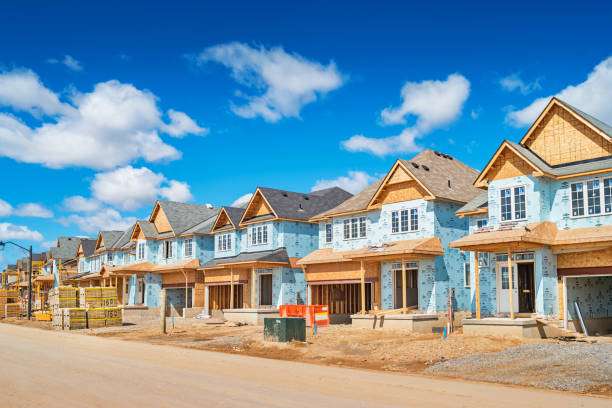
Housing is one of the most important issues facing cities and City Councillor across Canada. Whether the discussion is about affordability, neighbourhood change, rental availability, or housing choice, neighbourhoods are struggling with how to accommodate growth while preserving the intangible neighbourhood-feel or what makes the neighbourhood special.
Recently, Calgary offered an interesting case study that may have lessons for Winnipeg.
Earlier this year, Calgary City Council held public hearings on whether to repeal the city's blanket rezoning policy. During that process, researchers from the Canadian Municipal Barometer surveyed both public hearing attendees and a representative sample of Calgary residents to better understand how those participating in the debate at Council compared to the broader public.
The findings were revealing.
Those who attended the hearing tended to hold stronger opinions on housing issues than the general public. They were more likely to support blanket rezoning and other housing density measures, while the broader population expressed more moderate views. Hearing participants were also more polarized, often choosing the strongest levels of support or opposition available in the survey.
Researchers also found that hearing attendees were not fully representative of Calgary's population. Residents with university degrees were significantly overrepresented, as were residents from neighbourhoods closest to downtown and those experiencing the greatest amount of development activity. While public hearings remain an essential part of local democracy, the study suggests that the people who participate are often not a perfect reflection of the broader community.
This finding is important because it challenges assumptions that are often made during housing debates. Some argue that residents overwhelmingly oppose housing density. Others suggest that only a small vocal minority object to new housing. Calgary's research suggests the reality is more complicated. Most residents appear to occupy a middle ground. They recognize that housing affordability is a growing concern and that more housing is needed, but they may also have questions about how growth should occur, where it should occur, and what impacts it may have on their neighbourhoods.
I believe this conversation is particularly relevant for Winnipeg.
Our city is currently implementing significant housing reforms, including several changes to zoning bylaw in support of needed housing, and increasing affordable housing. Missing-middle housing, new opportunities for secondary suites, and initiatives connected to the Housing Accelerator Fund have been controversial. While these changes are intended to help address housing shortages, improve affordability, and provide more housing options for residents at different stages of life. Winnipeg is currently in court on some of the efforts to increase affordable housing.
Many residents have understandable concerns about traffic, parking, infrastructure, neighbourhood character, green space, and the pace of change as well as impacts from construction. These concerns deserve to be heard and considered.
As your City Councillor, I believe public engagement is essential. Public hearings provide an opportunity for residents to share local knowledge, express concerns, and influence decisions that affect their communities. This is why, as Chair of Property and Development I slowed the pace of the reforms, added more hearings and changed the hearings to ensure all of Council were involved. If we were going to allow more as of right housing and eliminate public hearings I worked to ensure we’d do it only after consultation in every community committee area and in a more intensive public hearing. Calgary's experience reminds us that public hearings are only one part of the democratic process.
Many people who are affected by housing decisions are often absent from traditional planning discussions. Renters, young adults trying to enter the housing market, newcomers, shift workers, people balancing multiple jobs, and future residents who have not yet moved into a neighbourhood rarely appear at public hearings. Yet the outcomes of housing decisions may affect them profoundly.
This is one of the reasons elected representatives have an important role to play.
Our responsibility is not simply to count how many people speak for or against a proposal. We must listen carefully to residents, consider publicly available evidence, like expert advice from academics, and planning evidence. Councillors must understand legal and policy requirements, and evaluate the long-term interests of the city as a whole. We must balance neighbourhood concerns with broader community needs, including housing affordability, economic growth, sustainability, and the needs of present and future generations.
Housing discussions are often framed as a choice between growth and preservation. In reality, the challenge is to find ways to accommodate growth while protecting and enhancing the qualities that make our neighbourhoods livable and vibrant.
The Calgary research offers a valuable reminder that democratic decision-making is most effective when it combines public participation with broader evidence about community needs. Public hearings remain vital, but they work best when complemented by surveys, community outreach, engagement with underrepresented groups, and thoughtful leadership.
As Winnipeg continues to grow, I believe our task is not to choose between listening to residents and building housing. Our task is to do both. That means creating opportunities for meaningful dialogue, like the Housing and Community Safety Dialogue I held last term, or the Climate Change and Adaptation Dialogue I held this term to consider diverse perspectives, and the evidence together to ensure that Winnipeg remains affordable, welcoming, and livable for current and future generations alike.
Housing affects all of us. The conversation should too. Here is a link to the report with thanks to the Canadian Municipal Barometer: https://cmbbmc.substack.com/p/calgary-public-hearing-on-blanket